
Gambling inside Rust: Bandit Camp's wheel, slots, blackjack and poker
The Big Wheel, slot machines, blackjack and poker at Bandit Camp all run on scrap, and scrap disappears at wipe. How each game works, what the wheel really pays, and when a spin is worth it.
 Daniel KovačLead reviewer
- Published
- Updated
- 8 min read
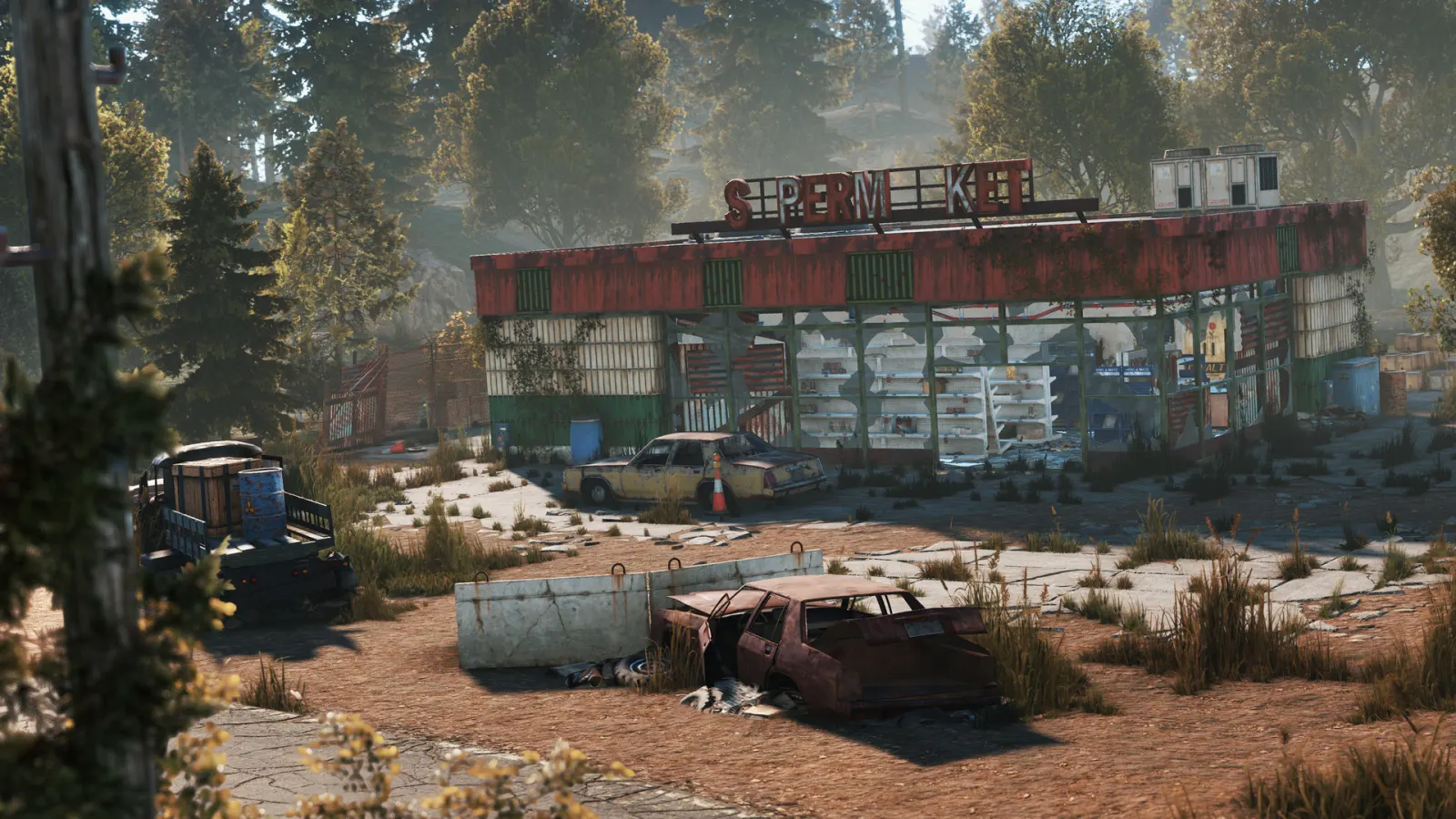
Bandit Camp is a safe-zone monument in the swamp, and it is where Rust keeps its gambling. The Big Wheel, the slot machines, the blackjack tables and the poker tables all take scrap, the same scrap you need for the tech tree and your next workbench. Nobody deposits a cent. You still lose something real, because every pile of scrap on the wheel is a pile you did not spend on progress.
For a lot of players, the camp is a lounge between raids: somewhere to buy a minicopter, trade a few items and throw some scrap at the wheel. That is a fine way to use it, as long as you know what each game costs. Here is how all four work, what the wheel actually pays, and how scrap gambling compares with the skin sites, including the one that borrowed the camp's name.
Getting in, and getting out with your scrap
Bandit Camp follows the standard safe-zone rules. Pull out a weapon and you get a warning to put it away. Ignore the warning, or turn up marked hostile after recent fighting, and the camp's defenses will kill you. Inside, other players have every reason to leave you alone, since attacking anyone gets them shot.
Outside is another story. Roamers know that people walk into Bandit Camp carrying scrap and walk out carrying whatever they won, and the swamp around it is a classic spot to get picked off. A few habits help:
- Bring only the scrap you plan to gamble, and leave the rest in your base.
- Spend winnings at the camp's vendors before the trip home if there is something you need anyway.
- Leave by a different route than the one you came in on, and do not hang around the entrances.
- If you are carrying a lot, bring a teammate who stays outside and watches the approach.
Scrap is the real stake, and it expires
Scrap is Rust's in-game currency. You get it from barrels, crates and recycling, and you spend it on the tech tree, on workbenches and at the shops in Outpost and Bandit Camp. Early in a wipe, the scrap in your pocket can decide whether your group gets its next workbench tonight or tomorrow. That is what you are really betting.
Then the forced wipe arrives on the first Thursday of the month, the map resets, and every piece of scrap on the server goes with the bases it was stored in. Plenty of servers wipe more often than that. Either way, scrap is a currency with a fixed end date.
That gives in-game gambling an unusual shape. Scrap is worth the most at the start of a wipe, when it buys progress you need, and close to nothing in the last day or two, when your group has what it is going to get. Our honest advice: if you want to play the wheel, do it late in the wipe, with scrap you have no use for. A spin on the eve of wipe costs you almost nothing. The same spin on day one can set your whole group back.
The Big Wheel, and what each number pays
The Big Wheel is the centerpiece. You put scrap on a number at one of the betting terminals around it, the wheel spins on a timer, and if it stops on your number you win a multiple of your stake. The numbers are 1, 3, 5, 10 and 20, and the number is also the multiplier: win on 3 and you get three times your bet on top of the scrap you put down.
What sets the wheel apart from almost every other gambling game is that the odds are in plain sight, painted on the wheel as segments. The layout players usually cite is 25 segments: twelve 1s, six 3s, four 5s, two 10s and a single 20. Count it yourself next time you are there, because Facepunch can change anything in an update, and changes show up in the patch notes on rust.facepunch.com. On that layout, the maths looks like this:
| Bet on | Segments | Chance per spin | Paid on a win, stake included | Average return per 100 scrap |
|---|---|---|---|---|
| 1 | 12 of 25 | 48% | 2x | 96 |
| 3 | 6 of 25 | 24% | 4x | 96 |
| 5 | 4 of 25 | 16% | 6x | 96 |
| 10 | 2 of 25 | 8% | 11x | 88 |
| 20 | 1 of 25 | 4% | 21x | 84 |
Read the last column. Betting on 1, 3 or 5 gives back 96 scrap per 100 on average, so the house keeps about 4%. Betting on 10 keeps 12%, and the 20 keeps 16%. The 20 is the bet everyone cheers for and, by a distance, the worst one on the wheel.
The low numbers share the same average but feel nothing alike. Betting 1 is close to a coin flip, and your pile drifts down slowly. Betting 5 means losing most spins and catching a bigger win now and then. If you are playing to pass the time while your teammates shop, 1 lasts the longest. If you want a story for the group chat, 5 gives you one without paying the extra tax on 10 and 20.
Spreading scrap across several numbers on the same spin does not help. Each bet keeps its own edge, so a 1 and a 20 placed together are simply a 4% bet and a 16% bet sharing a spin. No betting pattern changes that, including doubling up after a loss, which only makes the losing runs more expensive.
Slot machines
The slot machines take scrap, spin a set of reels and pay according to the table printed on the machine. They are quick and noisy, and they hide the one thing that matters. Unlike the wheel, you cannot count the outcomes, and we have not seen Facepunch publish the odds, so we are not going to guess at them.
What we can say is structural. Slots put scrap through faster than anything else at the camp, and speed is what turns a small edge into a large loss. The wheel makes you wait between spins. A slot spins as fast as you can press. If you play them, decide on a number of spins before you start and walk away when you reach it, win or lose.
Blackjack
Blackjack at Bandit Camp is played against the dealer for scrap, so the players next to you are not your opponents. The goal is the familiar one: finish closer to 21 than the dealer without going over.
Standard basic strategy applies here as much as at any table. The short version:
- Stand on a hard 17 or higher, every time.
- Never stand on a hard 11 or lower, because no single card can bust you.
- With a hard 13 to 16, stand if the dealer shows 2 to 6 and hit if the dealer shows 7 or higher.
- With a hard 12, stand against a dealer 4 to 6 and hit against everything else.
- Skip insurance if the table offers it.
Two rules shift the house edge in any version of blackjack: what the dealer does on a soft 17, and what a natural blackjack pays. Check both before you sit down with a big stack. Played well, blackjack rewards your decisions in a way the wheel and slots never will, though we cannot put a number on its edge without knowing those rules for certain.
Poker
The poker tables run Texas Hold'em between players, for scrap. That changes the maths completely. You are not playing the house. You are playing whoever sat down with you, and your results depend on how well you play relative to them.
That makes poker the one game at Bandit Camp where skill can put you ahead over time, and also the one where you are most exposed to other people. Keep these in mind:
- Two players at the same table may be teammates sharing cards over Discord. At any open table with strangers, assume it can happen.
- Plenty of Rust players sit down to bluff wildly for fun. That makes them expensive to call lightly and profitable to trap.
- Proximity voice chat carries, so watch what you say about your base while you sit there.
- Your stack is in-game scrap, and you still have to carry it home when you stand up.
- Buy in for an amount you are happy to lose, and leave when it is gone instead of running back to base for more.
Our order of preference
Say a teammate hands you 500 spare scrap on the last evening of a wipe and asks what to do with it. Our ranking, best to worst:
- Poker, if you are honestly better than the table. If you are not sure, you probably are not.
- The wheel on 1, 3 or 5. A known edge of about 4% on the usual layout, and you can check it by counting.
- Blackjack with basic strategy, once you have read the table's rules.
- The wheel on 10 or 20, for the cheer when it lands, knowing you are paying extra for it.
- Slots, last, because the odds are hidden and the pace is fast.
And if the scrap is early-wipe scrap your group needs, the right answer is a workbench.
Scrap gambling versus skin sites
On paper, the Big Wheel and a website's wheel or roulette look alike. In practice they live in different worlds. Scrap comes from playing and disappears at wipe. Skins come from the Item Store, the Steam Workshop and Twitch drops, survive every wipe, and have a cash value on the Steam Community Market. Losing 500 scrap costs you an evening of farming. Losing a skin costs you whatever you could have sold it for.
Fairness works differently too. At Bandit Camp you can count the wheel. On a skin site you check fairness through provably fair seeds, which takes a few more steps but lets you confirm each result after the fact, and our provably fair guide shows how. Skin sites also ask you to deposit, to trust their pricing of your items and to trust them to pay you back out, none of which applies to a wheel in a swamp.
Then there is the name. Bandit.Camp is a third-party skin gambling website, not part of Rust and not run by Facepunch. It offers its own wheel alongside roulette, cases, case battles, coinflip, dice, mines and upgrader, has been running since 2021, and sits mid-table in our ranking. The shared name is borrowed atmosphere. The edge, the stakes and the risks are those of any skin site.
If the wheel has made you curious about skin sites, read our beginner's guide to Rust gambling before depositing anything, and our piece on what makes a Rust skin valuable so you know what you would be putting on the table.
When the wheel stops being a joke
Scrap gambling costs nothing outside the game, but the habits it builds are the same ones skin sites profit from: one more spin to win back the last one, betting the 20 because a win feels due, farming scrap for the sole purpose of feeding the wheel, staying at the poker table because the next hand will turn it around. If you notice those pulls with scrap, take them seriously before real skins or money get involved. Our guide to responsible skin gambling covers limits and warning signs, the responsible gambling page links to free help, and US players can reach confidential support through the NCPG.
Frequently asked questions
What are the odds on the Rust Big Wheel?
On the commonly cited 25-segment layout, 1 comes up on 48% of spins, 3 on 24%, 5 on 16%, 10 on 8% and 20 on 4%. Bets on 1, 3 and 5 return about 96% on average, 10 returns 88% and 20 returns 84%.
What is the best number to bet on the Big Wheel?
1, 3 and 5 share the best average return. Pick 1 for slow, steady swings or 5 for rarer, bigger wins, and avoid 20, which has the worst return on the wheel.
Can you get killed at Bandit Camp while gambling?
Inside the safe zone, anyone who attacks another player gets shot by the camp's defenses, so fights there are rare. The real danger is the swamp outside, on the way in and out, so carry only the scrap you plan to use.
Is the Bandit.Camp website part of Rust?
No. It is a third-party skin gambling site that uses the monument's name. It has no link to your in-game scrap and carries the same risks as any other skin site.
Does scrap carry over after a wipe?
No. The forced wipe on the first Thursday of each month resets the map and everything stored on it, scrap included, and many servers wipe more often than that.
Keep reading
Related guides

Rust upgrader explained: why the odds are not what they look like
Upgrader win chance is the value ratio with the house edge taken off, so every target costs the same on average. Here is the maths, why laddering upgrades is worse, and how pricing moves the real odds.
 Tomás Herrera
8 min read

Using crypto on Rust gambling sites: coins, fees and withdrawal speed
Nine of the ten Rust sites we rank take the same ten coins. Which network to use, why confirmations and fees vary, how tags and address checks save deposits, and what slows a payout.
 Elin Sandberg
8 min read
Rust skins vs CS2 skins for gambling: liquidity, pricing and payouts
CS2 skins come with floats, patterns and a far bigger market. Rust skins have one price per name and a supply fixed at the store. What that means for your deposits and payouts.
Elin Sandberg
8 min read